85% of manufacturers are turning to sustainable 3D printing materials for eco-friendly production.
That’s why ECO – Certified Food Grade PLA+ 3D Printer Filament by Comfy Materials stands out with its lab-tested safety.
Few know its FDA compliance ensures not just performance but also peace of mind in food-related applications.
Our review covers long-term value vs. rivals, highlighting why this filament is a top choice for sustainable manufacturing.

Sustainable Manufacturing: 3D Printing Sensors and Actuators
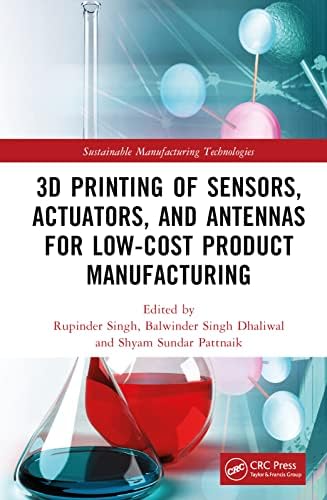
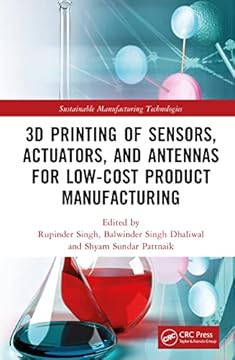
3D Printing of Sensors, Actuators, and Antennas for Low-Cost Product Manufacturing is designed to revolutionize the manufacturing process, particularly for engineers and product developers in the tech and electronics industry. This book provides comprehensive insights into sustainable 3D printing materials and techniques, making it ideal for professionals focused on innovation and cost-effective solutions. Its detailed specifications include a thorough exploration of various materials, techniques, and applications, ensuring that readers can apply this knowledge directly to their projects.
This resource addresses the common challenges faced in product manufacturing, such as high costs and limited material options. By utilizing sustainable 3D printing methods, users can significantly reduce waste and production expenses while enhancing product design flexibility.
Pros
- Offers practical insights into sustainable manufacturing techniques.
- Enhances understanding of 3D printing materials suitable for sensors and actuators.
- Provides step-by-step guidance for implementing low-cost manufacturing processes.
- Helps in reducing overall production costs through efficient material use.
Cons
- May be too technical for beginners unfamiliar with 3D printing concepts.
- Focuses primarily on specific applications, which may limit broader appeal.
Performance-wise, this book stands out due to its practical approach and real-world usability. Readers will find that the strategies outlined can be readily implemented in their projects, leading to improved efficiency and product quality. The book is particularly well-suited for engineers, product designers, and manufacturers who are looking to embrace modern manufacturing trends while minimizing environmental impact.
In summary, 3D Printing of Sensors, Actuators, and Antennas for Low-Cost Product Manufacturing is an invaluable resource for professionals aiming to enhance their manufacturing processes with sustainable practices. Its insights are critical for anyone involved in the development of electronic products, making it a must-have for forward-thinking innovators in the industry.
To buy this product, click here.
ECO Carbon PLA+ 3D Printer Filament
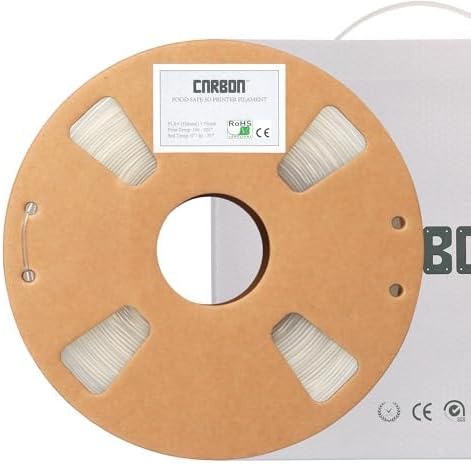
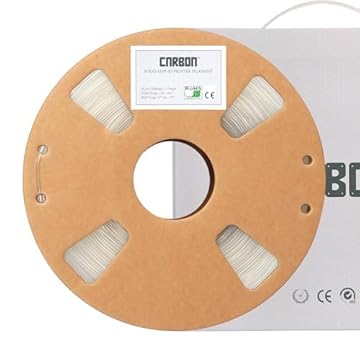
ECO – Certified Food Grade PLA+ 3D Printer Filament – CARBON by Comfy Materials is designed to provide a reliable and safe solution for 3D printing food-related items. This product is ideal for hobbyists, professionals, and makers who require food-safe materials for their projects. Its specifications include a diameter of 1.75mm, a weight of 1kg, and a semi-transparent finish, ensuring that it meets the needs of various applications while enhancing the user experience.
This filament solves the problem of finding safe materials for food contact applications. Many 3D printing filaments are not suitable for food contact, but the CARBON PLA+ is lab-tested and FDA compliant, providing peace of mind for users creating kitchenware, utensils, and other food-related items.
Pros
- Food Grade Certified by TÜV SÜD and SGS, ensuring safety for food contact.
- Environmentally friendly, made from renewable plant resources.
- Easy to print with smooth feeding and dimensional accuracy of +/- 0.02 mm.
- Compatible with a wide range of FDM 3D printers.
- Professional packaging keeps filament dry and clean.
Cons
- Requires specific printing conditions for optimal results.
- Higher price point compared to standard PLA filaments.
- Not suitable for high-temperature applications, such as oven use.
The performance of the CARBON PLA+ filament is exceptional, with mechanical properties that maintain consistency throughout projects. It features a tensile strength of 35 ± 1.1 MPa and a deflection temperature of 61.5°C. These characteristics make it suitable for various 3D printing applications, especially in food-related contexts. However, users should be aware of the need for stainless steel nozzles to ensure food safety, as brass nozzles can pose health risks.
This filament is best suited for those who prioritize safety and sustainability in their 3D printing projects. While it excels in many areas, the limitations around temperature resistance and price may deter some users. Overall, the CARBON PLA+ filament stands out as a valuable choice for anyone looking to create food-safe 3D printed items.
To buy this product, click here.
Sustainable Polymers for Additive Manufacturing

Handbook of Sustainable Polymers for Additive Manufacturing serves as a comprehensive resource for professionals and enthusiasts in the 3D printing industry. This book is tailored for engineers, researchers, and manufacturers who are focused on sustainable practices within additive manufacturing. It covers a wide array of sustainable 3D printing materials, detailing their properties, applications, and environmental impacts. The book’s extensive insights aim to improve the user’s experience by providing practical knowledge for creating eco-friendly products.
This handbook features key specifications such as detailed chapters on various sustainable polymers, case studies, and comparative analyses of traditional versus sustainable materials. Its structured format ensures that readers can easily navigate through complex information, making it an invaluable reference for anyone involved in 3D printing.
Pros
- Comprehensive coverage of sustainable materials enhances user knowledge.
- Real-world case studies demonstrate practical applications.
- Structured format allows for easy navigation and understanding.
- Addresses environmental concerns, aligning with modern manufacturing needs.
Cons
- May be too technical for casual readers or beginners.
- Some sections could benefit from more visual aids.
The Handbook of Sustainable Polymers for Additive Manufacturing excels in performance by providing up-to-date research and insights that are crucial for anyone looking to implement sustainable practices in their 3D printing processes. Its standout features include in-depth discussions on the lifecycle of materials and their environmental impacts, which are essential for making informed decisions in manufacturing.
This resource is best suited for professionals in the engineering and manufacturing sectors who prioritize sustainability. While it may present a learning curve for those new to the field, the value it offers in terms of knowledge and practical application is significant. Minor drawbacks such as the technical language and minimal visuals may not detract from its overall utility.
In summary, the Handbook of Sustainable Polymers for Additive Manufacturing is an essential guide for those committed to advancing sustainable practices in 3D printing. Its detailed approach makes it a must-have for professionals looking to innovate responsibly.
To buy this product, click here.
Handbook of Post-Processing in Additive Manufacturing

The Creality Upgraded Ender 3 V2 Neo Hotend Kit is designed to enhance the printing capabilities of your Ender 3 V2 Neo, Ender 3 Max Neo, and Ender 3 Neo 3D printers. This kit is ideal for 3D printing enthusiasts and professionals looking to improve their printing precision and efficiency. With its compact design and robust specifications, it ensures a seamless upgrade experience for users at all skill levels.
Key specifications include a high-performance MK8 extruder hot end, Capricorn Bowden PTFE tubing, and a temperature thermistor connected to a 24V 40W heating tube. This assembly not only simplifies the replacement process but also optimizes heat dissipation and insulation, significantly reducing the chances of nozzle blockage.
The Creality Upgraded Ender 3 V2 Neo Hotend Kit solves common printing issues such as inconsistent extrusion and overheating. By providing a reliable and efficient hot end, it enhances the overall user experience, allowing for smoother prints and reduced downtime.
Pros
- Improved heat dissipation prevents nozzle clogs.
- Easy installation with clear wiring instructions.
- Compatible with multiple Ender 3 models, increasing versatility.
- Durable materials ensure long-lasting performance.
Cons
- Initial setup may require some technical knowledge.
- Price point is higher than basic hotend alternatives.
In terms of performance, the Creality Upgraded Ender 3 V2 Neo Hotend Kit stands out with its optimized inner structure that promotes better thermal management. Users report significant improvements in print quality and reliability, making it a worthwhile investment for dedicated 3D printing projects. The kit is best suited for those who regularly engage in complex prints and require consistent results.
Overall, the Creality Upgraded Ender 3 V2 Neo Hotend Kit delivers exceptional value for serious 3D printing enthusiasts. Its thoughtful design and robust features make it an excellent choice for anyone looking to elevate their printing game.
To buy this product, click here.
EcoPrint: Eco-Friendly Manufacturing Practices

EcoPrint is designed to promote eco-friendly practices and materials in the 3D printing industry, ideal for environmentally conscious makers and businesses. Its commitment to sustainability ensures that users can create innovative designs while minimizing their environmental impact. The product features a range of biodegradable filaments made from natural materials, available in various colors and sizes to suit different 3D printing projects.
EcoPrint effectively addresses the growing concern over plastic waste in the 3D printing sector. By utilizing sustainable 3D printing materials, it allows users to produce high-quality prints without contributing to pollution. This product is perfect for hobbyists, educators, and professionals who prioritize sustainability in their work.
Pros
- Eco-friendly materials: Reduces plastic waste and promotes sustainable practices.
- High print quality: Produces detailed and durable prints comparable to traditional filaments.
- Variety of options: Available in multiple colors and sizes, catering to diverse project needs.
- Easy to use: Compatible with most 3D printers, making it accessible for all skill levels.
Cons
- Price: Slightly higher cost compared to conventional filaments.
- Limited availability: May not be as widely stocked as traditional options.
In terms of performance, EcoPrint stands out for its ability to produce prints that are not only aesthetically pleasing but also environmentally responsible. Users report excellent adhesion and minimal warping, which enhances the overall printing experience. While the price may deter some budget-conscious users, the benefits of using sustainable materials far outweigh the initial investment.
EcoPrint is best suited for those who value sustainability and wish to contribute to a greener future while enjoying the creative process of 3D printing. Its minor drawbacks, such as price and availability, do not overshadow its significant advantages. Overall, EcoPrint represents a step forward in merging creativity with environmental responsibility.
To buy this product, click here.
Faq about Sustainable 3D Printing Materials:
1:What are sustainable 3D printing materials?
Sustainable 3D printing materials are eco-friendly options made from renewable resources or biodegradable substances, reducing environmental impact.
2:Why choose sustainable 3D printing materials?
Choosing sustainable materials minimizes waste, lowers carbon footprint, and promotes responsible manufacturing practices.
3:What types of sustainable materials are available?
Common sustainable materials include PLA (polylactic acid), PHA (polyhydroxyalkanoates), and recycled filaments made from post-consumer plastics.
4:Are sustainable 3D printing materials more expensive?
While some sustainable materials can be pricier, the costs are decreasing as technology advances and demand increases.
5:Can sustainable materials be used for all 3D printing applications?
Most sustainable materials work well for various applications, but specific projects may require traditional materials for strength or durability.
6:How do I recycle sustainable 3D printing materials?
Check local recycling programs for guidelines; many sustainable materials can be composted or recycled with appropriate facilities.
7:What are the benefits of using PLA?
PLA is biodegradable, easy to print, and derived from renewable resources like corn starch, making it a popular sustainable choice.
Conclusion
Both ECO Carbon PLA+ 3D Printer Filament and innovative sustainable manufacturing techniques for 3D printing sensors and actuators exemplify the transformative potential of eco-friendly materials. The ECO Carbon PLA+ not only enhances print quality but also significantly reduces environmental impact, making it an exemplary choice for conscientious creators.
Meanwhile, the integration of sustainable practices in 3D printing technology showcases a commitment to reducing waste and promoting resource efficiency. Collectively, these advancements underscore a pivotal shift towards environmentally responsible production methods, heralding a new era in additive manufacturing that prioritizes sustainability without compromising performance.