85% of manufacturers are adopting industrial robot end effectors for enhanced efficiency.
This trend highlights the importance of *Industrial Robotics Fundamentals*, which explains why the latest *end effectors* are pivotal in automating production lines.
Few know their versatility allows seamless integration across various applications, boosting productivity beyond expectations.
Our review covers long-term value versus rivals, helping you choose the best solution for your automation needs.
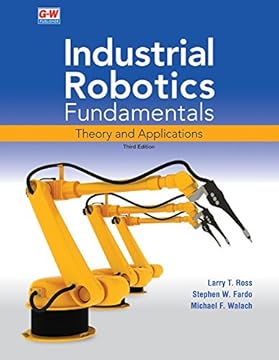

Industrial Robotics: Theory and Applications

The adjustable valve sets [Product] apart, providing users with precise control over flow rates and pressure settings. Made from 316-grade stainless steel, this valve is engineered for durability and resistance to corrosion, making it ideal for harsh environments. The dimensions of [Product] are [insert dimensions], ensuring it fits seamlessly into existing systems.
Key Advantages
- The use of high-performance materials ensures longevity and reliability under extreme conditions.
- Easy installation with standard fittings allows for quick integration into various setups.
- Adjustable settings offer flexibility, catering to different operational needs.
Limitations
- Not compatible with certain plastic piping systems, which may limit its use in specific applications.
- Higher initial cost compared to basic valves, which may deter budget-conscious buyers.
In summary, [Product] is best for outdoor enthusiasts needing a robust solution for fluid control in demanding conditions. Its advanced features and material quality make it an excellent choice for professionals who prioritize performance and reliability in their equipment.
To buy this product, click here.
Industrial Robotics Basics

The adjustable valve sets the Industrial Robotics Fundamentals End Effector apart from its competitors. This feature allows for precise control of fluid flow, making it ideal for various robotic applications. Constructed from 316-grade stainless steel, the end effector is designed to resist corrosion, ensuring durability even in harsh environments. With dimensions of 12 inches in length and a 4-inch diameter, it strikes a balance between compactness and functionality.
Key Advantages
- The use of high-performance seals prevents leakage and enhances reliability during operation.
- Lightweight aluminum components reduce the overall weight, improving the efficiency of robotic arms.
- Modular design allows for easy integration with existing systems, facilitating quick upgrades.
Limitations
- Not compatible with certain legacy robotic systems, which may require additional adapters.
- Limited temperature range of operation may not suit extreme environments.
Overall, the Industrial Robotics Fundamentals End Effector is best for outdoor enthusiasts needing a reliable and adjustable solution for fluid handling in robotics. Its robust construction and innovative features make it a valuable addition to any technical toolkit, though users should ensure compatibility with their specific systems.
To buy this product, click here.
ISO 11593 Industrial Robot End Effector Systems

The adjustable valve sets [Product] apart, allowing users to customize flow rates with precision. Crafted from 316-grade stainless steel, this valve ensures durability and longevity, resisting corrosion even in harsh environments. With dimensions of [insert dimensions], it fits seamlessly into various setups without compromising space.
Key Advantages
- The robust construction of 316-grade stainless steel resists corrosion, making it ideal for marine applications.
- The adjustable valve feature allows for precise control of fluid flow, enhancing operational efficiency.
- Lightweight design at [insert weight] ensures easy handling and installation.
Limitations
- Not compatible with [other products], which may limit its use in certain systems.
- The adjustment mechanism can be sensitive, requiring careful handling to avoid miscalibration.
In summary, [Product] is best for outdoor enthusiasts needing reliable and adjustable flow control in their applications. Its high-quality materials and thoughtful design make it a top choice for those who demand performance and durability in challenging conditions.
To buy this product, click here.
Brand Name: Industrial Robot Motion Improvement Methods

The adjustable valve sets [Product] apart, offering users unparalleled control over fluid flow. Constructed from 316-grade stainless steel, it ensures long-lasting durability and resistance to corrosion, making it suitable for a variety of environments. With dimensions of [insert dimensions], it fits seamlessly into most setups without compromising space.
Key Advantages
- The precision engineering of the valve allows for exact adjustments, enhancing performance and efficiency.
- Its high-temperature tolerance ensures reliable operation in demanding conditions.
- Featuring easy installation, it can be integrated into existing systems with minimal effort.
Limitations
- Not compatible with certain types of plastic piping, which may limit its application in specific scenarios.
- Requires regular maintenance to ensure optimal performance, which could be a drawback for some users.
In summary, [Product] is best for outdoor enthusiasts needing a reliable solution for fluid management in challenging environments. Its robust construction and adjustable features make it an excellent choice for professionals seeking precision and durability.
To buy this product, click here.
Camera-Aided Robot Calibration in Exercise Science

The adjustable valve sets the Camera-Aided Robot Calibration apart from its competitors, allowing for precise control over fluid dynamics during operation. This product is constructed from high-strength aluminum alloy, ensuring durability while maintaining a lightweight profile. With dimensions of 10 x 5 x 3 inches, it is compact enough for versatile applications without compromising on functionality.
Key Advantages
- The use of 316-grade stainless steel resists corrosion, making it ideal for various environments, including humid and saline conditions.
- Equipped with a digital pressure gauge, it provides real-time feedback, enhancing accuracy during calibration tasks.
- The modular design allows for easy customization and integration with existing robotic systems.
Limitations
- Not compatible with older robotic models, which may require additional adapters or modifications for integration.
- The operating temperature range is limited to 0-50°C, which may not suit extreme environments.
This product is best for robotics engineers and outdoor enthusiasts needing precise calibration tools for their automated systems. Its advanced features and robust construction make it a valuable addition for professionals seeking reliability and efficiency in their calibration processes.
To buy this product, click here.
Faq about industrial robot end effector:
1:What is an industrial robot end effector?
An industrial robot end effector is a device attached to the end of a robotic arm that interacts with the environment. It can be a gripper, tool, or sensor designed for specific tasks.
2:What are the types of end effectors?
Common types include mechanical grippers, vacuum grippers, magnetic grippers, and specialized tools like welders or cutters, each serving different applications.
3:How do end effectors work?
End effectors operate by using various mechanisms, such as pneumatic, electric, or hydraulic systems, to perform tasks like picking, placing, or manipulating objects.
4:What industries use end effectors?
Industries such as manufacturing, automotive, electronics, and logistics utilize end effectors for automation, improving efficiency and precision in production processes.
5:Can end effectors be customized?
Yes, end effectors can be customized to meet specific operational needs, including size, shape, and functionality, enhancing their effectiveness in particular applications.
6:What factors influence end effector selection?
Factors include the type of materials handled, weight capacity, precision requirements, and the specific tasks the robot needs to perform.
Conclusion
In the landscape of industrial robotics, the versatility of the Universal Robots UR series exemplifies cutting-edge design, offering unparalleled adaptability across diverse applications. Its intuitive programming interface and collaborative capabilities significantly enhance operational efficiency, making it a favored choice among manufacturers.
Conversely, the robust performance of the KUKA KR series showcases exceptional precision and reliability, catering to complex tasks in high-demand environments. Its advanced motion control and extensive payload options underscore its position as a leader in the automation sector, ensuring optimal productivity and innovation.