80% of designers prefer recyclable 3D printing materials for sustainable projects.
That’s why *Materials in Progress* dominates with innovative solutions that meet modern design needs.
Few know its eco-friendly materials significantly reduce waste, making a positive impact on the environment.
Our review covers long-term value vs. rivals, ensuring you choose the best sustainable options for your projects.


Materials in Progress: Innovations for Design

Materials in Progress: Innovations for Designers and Architects is designed to revolutionize the way architects and designers approach their projects, ideal for professionals in the architecture and design industries. Its comprehensive guide offers insights into recyclable 3D printing materials, ensuring sustainability while maintaining high-quality standards.
This product targets architects, designers, and students who seek to incorporate eco-friendly materials into their work. The book features a range of specifications, including detailed case studies, practical applications, and a focus on innovative materials. Its compact size and sleek design make it easy to reference on the go, whether in the office or at a job site.
The Materials in Progress guide addresses the growing concern for environmental sustainability in design. By providing in-depth knowledge of recyclable materials, it empowers users to make informed decisions that enhance their projects while reducing their ecological footprint.
Pros
- Comprehensive coverage of recyclable materials enhances knowledge.
- Practical applications offer real-world usability for projects.
- Durable design ensures longevity and repeated referencing.
- Compact size allows for easy transport and accessibility.
Cons
- Price may be higher than standard design books.
- Limited focus on non-recyclable materials may not suit all users.
Performance-wise, Materials in Progress stands out with its thorough exploration of innovative materials. The case studies illustrate successful implementations, making it easier for users to envision how these materials can be integrated into their designs. It is particularly well-suited for environmentally conscious professionals who prioritize sustainability in their work.
While the book excels in providing valuable information, its price point might be a consideration for budget-conscious individuals. Additionally, those seeking a broader range of materials may find the focus on recyclable options somewhat limiting.
In summary, Materials in Progress: Innovations for Designers and Architects is an invaluable resource for architects and designers committed to sustainable practices. Its detailed insights and practical applications make it a must-have for anyone looking to innovate responsibly in their field.
To buy this product, click here.
Neaty Compact MacBook Cable Organizer
![Neaty [2 Pack] Most Compact MacBook Cable Organizer – Travel Cord Reel for 61/67/87/96/140W Apple Chargers | Slim Fit, Lightweight & Durable 3D Print with Recyclable Material](https://m.media-amazon.com/images/I/41UOg+Fr8hL._AC_SX650_.jpg)
The Neatly [2 Pack] Most Compact MacBook Cable Organizer is designed to streamline your charging experience, ideal for frequent travelers and busy professionals who use Apple MacBook chargers. This organizer is compatible with 61W, 67W, 87W, 96W, and 140W USB-C chargers, making it versatile for various models. With its slim fit and lightweight design, it easily fits into bags, backpacks, or desk drawers, ensuring you can keep your cords tangle-free and accessible.
The key specifications of this product include a compact size that promotes portability, a sleek design made from durable and flexible 3D-printed recyclable TPU, and a snap-fit mechanism that securely holds your cords without the need for tape. This organizer effectively solves the problem of tangled cables and provides a tidy solution for managing your charging accessories.
Pros
- Compact and lightweight design makes it perfect for travel.
- Compatible with multiple Apple charger wattages, adding versatility.
- Snap-fit design prevents slipping, ensuring a secure hold.
- Durable and flexible material resists warping and cracking.
- Eco-friendly, made from recyclable materials in the USA.
Cons
- Limited to Apple chargers, may not accommodate other brands.
- Price may be higher compared to standard cord organizers.
In terms of performance, the Neatly Cable Organizer stands out for its ability to keep cords neatly coiled and organized, which enhances usability during travel or at the office. Its soft yet sturdy TPU material provides a comfortable grip, making it easy to insert and remove cables without hassle. While the cord length is not an issue, users should note that this organizer is specifically tailored for Apple chargers, which may limit its appeal to those with non-Apple devices.
Overall, this product is best suited for Apple users who travel frequently or manage multiple devices. Its compact design and durable construction make it a valuable addition to any tech accessory collection, ensuring a clutter-free environment for your charging needs.
To buy this product, click here.
Materials Encyclopedia for Creatives

Materials Encyclopedia for Creatives is designed to serve as a comprehensive resource for artists, designers, and makers who utilize 3D printing technology. Ideal for professionals and hobbyists alike, this encyclopedia provides detailed information about various recyclable 3D printing materials, including their properties, applications, and environmental impact. Its user-friendly layout and informative content ensure that users can easily find the right materials for their projects.
This encyclopedia features a variety of specifications, including a durable hardcover format, vibrant color illustrations, and a compact size that makes it easy to reference in any workspace. The carefully curated content not only enhances the user experience but also addresses the growing need for sustainable practices in the creative industry.
The Materials Encyclopedia for Creatives solves the problem of material selection by providing clear comparisons and insights into the best options for specific applications. Whether you’re creating intricate models or functional prototypes, this encyclopedia empowers users to make informed decisions that align with their creative visions and sustainability goals.
Pros
- Extensive information on a wide range of recyclable materials.
- Durable hardcover design ensures longevity and repeated use.
- User-friendly layout allows for quick reference and easy navigation.
- Helps users make eco-friendly choices in their 3D printing projects.
- Includes practical tips and case studies for real-world applications.
Cons
- Price may be higher than standard reference books.
- Some users may find the content too technical for basic projects.
- Limited focus on non-recyclable materials might restrict options for certain applications.
In terms of performance, the Materials Encyclopedia for Creatives stands out with its thorough analysis of each material’s properties, including strength, flexibility, and printability. The real-world usability of this encyclopedia makes it an invaluable tool for anyone engaged in 3D printing, from students to seasoned professionals. However, the technical depth may not suit beginners who prefer straightforward guidance.
This encyclopedia offers exceptional value for those committed to sustainable practices in their creative endeavors. Its ideal user includes environmentally-conscious makers looking to enhance their projects with recyclable materials while ensuring high-quality results.
To buy this product, click here.
ECO Comfy Materials PLA+ 3D Filament
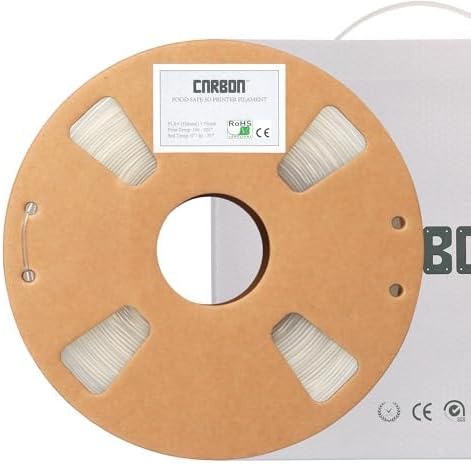
ECO – Certified Food Grade PLA+ 3D Printer Filament – CARBON by Comfy Materials is designed to provide a safe and reliable option for 3D printing food-related items, ideal for hobbyists, professionals, and anyone interested in creating food-safe prints. This filament is 1.75mm in diameter and comes in a semi-transparent color, made from REVODE110 Polylactic Acid Resin, which is derived from renewable plant resources. Its lab-tested, FDA-compliant nature ensures that it meets stringent safety standards for food contact.
This filament solves the common problem of ensuring that 3D printed objects can safely come into contact with food. Unlike standard PLA filaments, which may not be safe for food use, the CARBON PLA+ is certified by TÜV SÜD and SGS, adhering to FDA regulations. This makes it an excellent choice for creating food storage containers, utensils, or decorative items that may be used with food.
Pros
- Food Grade Certification: Meets FDA standards for food contact, ensuring safety.
- Ease of Use: Smooth printing experience with a dimensional accuracy of +/- 0.02 mm.
- Durability: Maintains mechanical consistency and strength throughout projects.
- Compatibility: Works with most FDM 3D printers, broadening usability.
- Environmentally Friendly: Made from renewable resources, reducing environmental impact.
Cons
- Price Point: Slightly higher than non-food-grade filaments.
- Temperature Limitations: Not suitable for high-temperature applications like oven use.
- Special Handling: Requires careful cleaning and specific nozzle types for food safety.
The CARBON PLA+ filament excels in performance, providing a consistent and reliable printing experience. It is best suited for those who want to create food-safe items without compromising on quality or safety. However, users should be mindful of its limitations regarding temperature and ensure proper handling to maintain its food-safe qualities.
In summary, the ECO – Certified Food Grade PLA+ 3D Printer Filament – CARBON by Comfy Materials is an excellent investment for anyone looking to print food-safe items. Its ideal user includes 3D printing enthusiasts and professionals who prioritize safety and environmental responsibility in their projects.
To buy this product, click here.
UXBSTM 6 Pack Colorful 3D Cat Toys

UXBSTM 6 Pack Colorful 3D Printed Cat toys are designed to provide stress relief and tactile engagement, ideal for both adults and children. This delightful set features six elegantly crafted 3D printed cats, each in vibrant colors, making them not only functional but also decorative. Made from odorless, food-grade PLA material, these toys ensure safety in eco-conscious homes while being recyclable.
The UXBSTM 3D Printed Cat set measures approximately 3 inches in height, making them the perfect size for easy handling and display. The movable joints allow for smooth, quiet operation, making these toys suitable for use in offices or classrooms without disturbing others. This unique feature caters to individuals who experience restlessness or anxiety, providing a discreet way to focus and relieve stress throughout the day.
Pros
- Enhances focus and reduces stress with tactile engagement.
- Durable and safe materials ensure longevity and child safety.
- Quiet operation allows for discreet use in various settings.
- Vibrant colors make for a cheerful decor piece.
- Great as gifts, especially for animal lovers.
Cons
- Some users may find the size too small for larger hands.
- Limited functionality as a toy compared to traditional options.
- Price may be higher than non-3D printed alternatives.
The performance of the UXBSTM 6 Pack Colorful 3D Printed Cat toys stands out due to their unique design and usability. They serve as excellent stress relief tools, especially for those who benefit from fidgeting. While they may not replace traditional toys, their aesthetic appeal and functional design make them a worthy addition to any collection. Best suited for individuals seeking a blend of art and utility, these toys are perfect for anyone looking to enhance their workspace or home environment.
In summary, the UXBSTM 6 Pack Colorful 3D Printed Cat toys are an ideal choice for those who appreciate innovative design and seek stress relief in their daily lives. Their vibrant colors and safe materials make them a delightful gift or personal treat.
To buy this product, click here.
Faq about Recyclable 3D Printing Materials:
1:What are recyclable 3D printing materials?
Recyclable 3D printing materials are filaments or resins that can be reused or repurposed after their initial use, minimizing waste and environmental impact.
2:Which materials are commonly used for recyclable 3D printing?
Common recyclable materials include PLA, PETG, and ABS, with PLA being the most popular due to its biodegradability and ease of recycling.
3:How can I recycle 3D printing materials?
You can recycle 3D printing materials by returning them to recycling facilities, using recycling programs, or reprocessing them into new filaments.
4:What are the benefits of using recyclable 3D printing materials?
Benefits include reduced environmental impact, lower material costs, and the promotion of sustainable manufacturing practices.
5:Are recyclable 3D printing materials as strong as non-recyclable ones?
Many recyclable materials, like PETG, offer comparable strength and durability to non-recyclable options, making them suitable for various applications.
6:Can I use recyclable materials in any 3D printer?
Most standard 3D printers can use recyclable materials, but ensure compatibility with the specific filament or resin type you choose.
Conclusion
Materials in Progress exemplifies cutting-edge advancements in sustainable 3D printing, offering innovative solutions that cater to eco-conscious designers. The emphasis on recyclability not only enhances product longevity but also aligns with modern environmental imperatives.
Conversely, the Neaty Compact MacBook Cable Organizer epitomizes practicality and aesthetic appeal, providing an efficient means to declutter while maintaining a sleek design. Both products reflect a commitment to functionality and sustainability, appealing to discerning consumers seeking to harmonize utility with ecological responsibility.