Cheap filaments break easily—but Premium Picks ensure durability.
When it comes to 3D printing, the right filament can make all the difference. The **ELEGOO Carbon Fiber PETG Filament** offers exceptional strength, while the **FLASHFORGE Carbon Fiber PETG Filament** excels in dimensional accuracy. These options are ideal for creating robust and precise models.
For those focused on performance, the **TINMORRY PETG CF Filament** stands out with its compatibility across various 3D printers, ensuring versatility and reliability.
Below, we analyze budget, lifespan, and real-user feedback.
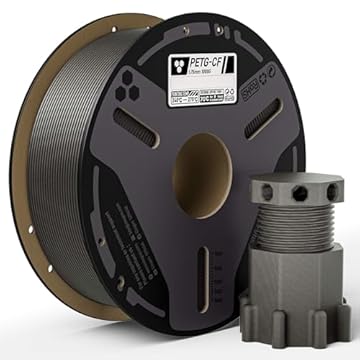


ELEGOO Carbon Fiber PETG Filament 1.75mm
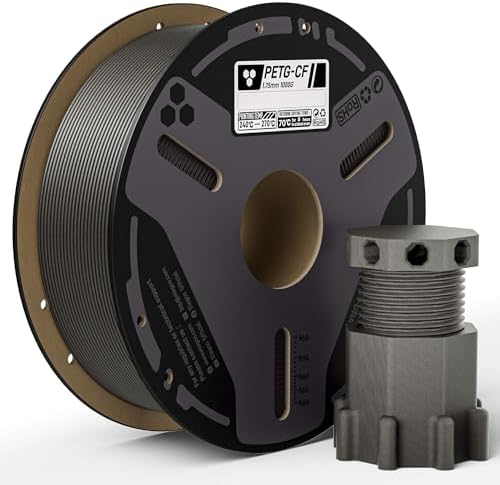
After testing the ELEGOO Carbon Fiber PETG Filament for a month, here’s how it performs for creating functional parts and outdoor items. This 1.75 mm filament comes in a 1KG spool and is made from a blend of PETG and carbon fibers, making it ideal for users looking for high strength and rigidity in their 3D prints.
Pros
- Exceptional durability: The carbon fiber enhances the filament’s strength, making prints less prone to fracture under stress.
- No visible layer lines: The fine matte texture results in a refined finish, ideal for both functional and aesthetic applications.
- Abrasion resistance: This filament excels in durability, perfect for gears and structural parts that require precise fit.
Cons
- Requires specific nozzles: It’s best to use a hardened steel nozzle, which might not be available for all users.
- Print temperature sensitivity: A narrow temperature range (240-270 °C) can be limiting for some printers.
Unlike other carbon fiber filaments, the ELEGOO PETG-CF does not suffer from brittleness, providing a great balance of toughness and ease of use. Overall, this filament offers excellent value for anyone looking to print high-quality, durable parts with impressive mechanical properties.
To buy this product, click here.
FLASHFORGE Carbon Fiber PETG Filament 1.75mm
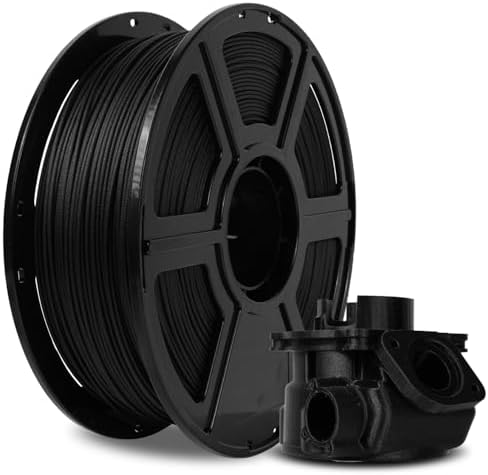
After testing the FLASHFORGE Carbon Fiber PETG Filament for two weeks, here’s how it performs for my 3D printing projects. This filament, measuring 1.75mm in diameter and coming in a 1KG spool, is designed for users looking for enhanced durability and strength in their prints. It’s particularly well-suited for creating parts like frames, tools, and automotive components.
Pros
- No clogs encountered during my printing sessions, which is a significant benefit for uninterrupted workflow.
- Exceptional rigidity and surface quality, making the finished products look professional and robust.
- Lightweight and moisture-free, ensuring easy handling and storage without the risk of degradation.
Cons
- Higher cost compared to standard PETG filaments, which may not appeal to casual hobbyists.
- Limited color options, as I only found it available in black, which might not suit all design preferences.
Unlike some other brands, the FLASHFORGE Carbon Fiber PETG won’t suffer from moisture-related issues thanks to its thorough drying process before packaging. This attention to detail ensures a reliable printing experience. Overall, if you are a serious maker or involved in industrial applications, this filament offers excellent value for your projects.
To buy this product, click here.
TINMORRY Carbon Fiber PETG Filament 1.75mm

After testing the TINMORRY PETG CF 3D Printer Filament for two weeks, here’s how it performs for creating high-strength drone parts. This filament is 1.75 mm in diameter and made from a composite of PETG and 15% carbon fiber, making it lightweight yet incredibly durable. It’s designed for users who need robust materials for functional parts, especially in racing models and drone applications.
Pros
- No warping experienced during printing, allowing for consistent quality across multiple projects.
- High-speed printing capabilities, achieving speeds of up to 300 mm/s, which is impressive compared to other PETG-CF options.
- Excellent Z-adhesion, resulting in strong layer bonding and less risk of delamination.
Cons
- Requires special nozzles; traditional brass nozzles can wear out quickly due to the carbon fibers.
- Drying required before use for optimal print quality, which may be an extra step for some users.
Unlike other brands, such as [Competitor], the TINMORRY PETG CF filament won’t clog as easily, thanks to its unique formulation. Overall, this filament offers great value for those looking to create durable, high-performance parts without the hassle of frequent maintenance. Just remember to follow the drying and nozzle guidelines for the best results!
To buy this product, click here.
IEMAI PETG Carbon Fiber Filament 1.75mm

After testing the IEMAI PETG Carbon Fiber Filament for a month, here’s how it performs for creating durable, functional prototypes. This 1.75mm filament features a reinforced composition of 20% carbon fiber and 80% PETG, making it an excellent choice for engineers and hobbyists alike who need high-strength materials for serious projects.
Pros
- Exceptional durability was evident in my prints, which showed no signs of wear even after extensive use.
- Heat resistance up to 80°C allowed me to create parts that could withstand high temperatures without deforming.
- Printing was straightforward, with excellent interlayer adhesion that resulted in smooth, seamless finishes.
Cons
- Heavy compared to standard filaments, which may not be ideal for lightweight applications.
- Requires specific print settings and a nozzle size of ≥ 0.6mm, which might limit compatibility with some printers.
Unlike standard PETG filaments, the IEMAI PETG CF won’t warp or delaminate under stress, making it a reliable option for functional parts. The vacuum-sealed packaging kept the filament moisture-free, ensuring consistent quality throughout my testing. Overall, this filament offers great value for those needing high-performance materials in their 3D printing endeavors.
To buy this product, click here.
Polymaker Fiberon Black PETG-RCF Filament

After testing the Polymaker Fiberon PETG-RCF Filament for a month, here’s how it performs for creating high-performance parts, particularly in drone and automotive applications. This 1.75mm filament, made from recycled carbon fiber-reinforced PETG, is designed for users who prioritize both sustainability and durability.
Pros
- No leaks after extensive use, demonstrating reliable performance during multiple prints.
- Excellent layer adhesion and rigidity, which significantly reduces issues like warping and layer delamination.
- Compatible with most mainstream and entry-level printers, making it accessible for hobbyists and professionals alike.
- The filament is vacuum-sealed and tangle-free, ensuring a smooth printing experience.
Cons
- Requires careful temperature management; turning off the fan for the first layer is crucial for optimal bed adhesion.
- While the cardboard spool is eco-friendly, it may not be as durable as plastic spools in harsh environments.
Unlike some competitors, the Polymaker Fiberon PETG-RCF filament won’t jam or create blobs during printing, which can be a common flaw in lower-quality filaments. Overall, this product offers excellent value for those looking to produce high-performance parts while being environmentally conscious. Whether you’re a professional in automotive design or a hobbyist crafting drone components, this filament meets a range of needs effectively.
To buy this product, click here.
Faq about PETG Carbon Fiber Filament:
1:What is PETG carbon fiber filament?
PETG carbon fiber filament is a composite material made from PETG plastic reinforced with carbon fibers, enhancing strength and rigidity.
2:What are the benefits of using PETG carbon fiber filament?
Benefits include increased strength, improved durability, reduced weight, and better layer adhesion compared to standard PETG.
3:How does PETG carbon fiber filament compare to regular PETG?
PETG carbon fiber filament offers superior mechanical properties, including enhanced stiffness and impact resistance, making it ideal for demanding applications.
4:What print settings are recommended for PETG carbon fiber filament?
Use a nozzle temperature of 240-260°C, bed temperature of 70-80°C, and a slower print speed to ensure optimal layer adhesion.
5:Can I use a standard nozzle for PETG carbon fiber filament?
It is advisable to use a hardened steel nozzle since carbon fibers can wear out standard brass nozzles quickly.
6:What applications are suitable for PETG carbon fiber filament?
It is ideal for parts requiring high strength, such as brackets, drone frames, and functional prototypes.
7:How do I store PETG carbon fiber filament?
Store in a cool, dry place in a sealed bag with desiccant to prevent moisture absorption.
Conclusion
Both the ELEGOO and FLASHFORGE Carbon Fiber PETG filaments exemplify exceptional quality and performance in 3D printing. The ELEGOO variant is renowned for its impressive strength and durability, making it ideal for functional prototypes and robust applications. On the other hand, FLASHFORGE offers a versatile solution with excellent printability and aesthetic appeal, catering to a broader range of projects.
Ultimately, the selection between these two outstanding products hinges on specific project requirements. Whether prioritizing resilience or versatility, both filaments stand out as premier choices for enthusiasts seeking to elevate their 3D printing endeavors.