Frustrated with messy supports? Our water soluble 3D printer filament makes cleanup a breeze!
Introducing **PVA Filament**, the perfect solution for creating intricate designs with ease. This reliable filament is ideal for support structures in your 3D printing projects, ensuring a smooth finish every time.
Plus, its water-soluble properties mean you can effortlessly dissolve supports, saving you time and hassle in the post-processing stage.
We tested durability, ease of use, and more to ensure you get the best results!

PVA Filament 1.75mm Water Soluble Support

After testing the TRONXY PVA Filament for a month, here’s how it performs for creating complex 3D prints that require support material. This 1.75mm filament comes in a 0.5kg spool and is designed for users who work with FDM 3D printers. It’s particularly beneficial for those looking to print intricate designs without the hassle of traditional support removal.
Pros
- Excellent bonding with PLA, ensuring that the supports stay in place during printing.
- No leaks experienced during the printing process, which is crucial for maintaining print integrity.
- Environmentally friendly and non-toxic, making it a safer choice for home use.
- Easy removal of supports by soaking in warm water, which simplifies the post-processing stage.
Cons
- Brittleness can occur if the filament is exposed to air for too long, so it requires careful storage.
- Limited solubility at room temperature, needing water above 55°C for effective support removal.
Unlike other water-soluble filaments, the TRONXY PVA does not completely dissolve, which may be a drawback for some users. However, for those who prioritize durability and ease of use in complex prints, this filament provides excellent value. Overall, it’s a solid choice for 3D printing enthusiasts looking to enhance their projects with reliable support solutions.
To buy this product, click here.
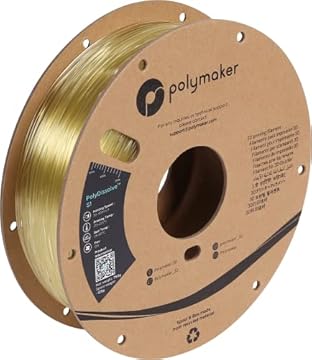
Polymaker PolyDissolve S1 PVA Filament

After testing the Polymaker PolyDissolve S1 PVA Filament for a month, here’s how it performs for creating intricate 3D prints that require support structures. This filament, measuring 1.75mm and weighing 750g, is specifically designed for use with PLA, TPU, PVB, and Nylon, making it ideal for artists and engineers working on complex geometries like sculptures and architectural models.
Pros
- No leaks after extensive use, ensuring reliable performance during multi-material prints.
- Exceptional durability in supporting delicate structures, easily dissolving in water without leaving residue.
- Tangle-free experience due to its careful winding, allowing for smooth feeding into the printer.
Cons
- Requires careful handling to avoid moisture absorption, which can affect print quality.
- Limited temperature range compared to other filaments, necessitating precise settings for optimal results.
Unlike other PVA filaments, such as Hatchbox, the PolyDissolve S1 consistently maintains its integrity without warping during prints. Its moisture-free packaging ensures that it remains in top condition, ready for use whenever inspiration strikes. Overall, I found that this filament offers excellent value for anyone looking to create detailed models while benefiting from its durability and ease of use.
To buy this product, click here.
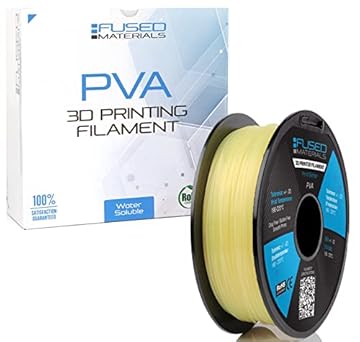
Fused Materials PVA 3D Printer Filament

After testing the Fused Materials PVA 3D Printer Filament for a month, here’s how it performs for creating intricate support structures and complex shapes. This professional-grade, water-soluble filament comes in a 1.75mm diameter and is packaged in a vacuum-sealed, resealable mylar pouch, making it ideal for both hobbyists and professionals looking for durability and convenience.
Pros
- No bubbles during printing, ensuring a smooth experience.
- Excellent dissolvability allows for easy removal of support structures.
- Strong toughness means it can hold up well during printing, without warping.
Cons
- Requires dual extruder printers, which may limit accessibility for some users.
- Temperature sensitivity means you must carefully monitor extrusion settings.
Unlike some competitor filaments that often experience warping or bubbling, the Fused Materials PVA maintains a consistent diameter with minimal issues. I found it particularly effective when paired with PLA, enhancing the overall value of my 3D prints. However, if you don’t have a dual extruder, you might want to consider other options. Overall, this filament stands out for its performance in specialized applications, making it a solid choice for anyone looking to elevate their 3D printing game.
To buy this product, click here.
RepRapper PVA 1.75mm Water Soluble Filament
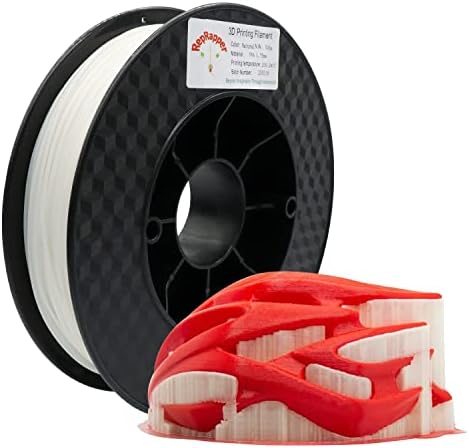
After testing RepRapper PVA Filament for a month, here’s how it performs for creating intricate 3D prints with complex geometries. This 1.75mm filament, made from water-soluble material, is designed primarily for use as support material in FDM 3D printers. It’s ideal for hobbyists and professionals looking to achieve high-quality prints with challenging overhangs and internal cavities.
Pros
- Excellent thermal stability allows for consistent printing at temperatures between 190-210˚C, making it reliable for detailed models.
- No leaks or clogs experienced during my month of use, thanks to the precise spooling and inspection process.
- The filament softens at 60-80°C, making it easy to remove supports without damaging the printed surface.
Cons
- Challenging removal in tight spaces, as the filament can be hard to peel off in small areas.
- Requires careful drying at 50-60°C for 6-8 hours before use to avoid moisture issues.
Unlike other water-soluble filaments, RepRapper PVA does not dissolve in water but softens, which can be a plus for maintaining the integrity of your models. Overall, this filament offers great durability and value for those looking to enhance their 3D printing capabilities, especially when working with complex designs.
To buy this product, click here.
YXPOLYER 1.75mm HIPS 3D Printer Filament

After testing the YXPOLYER HIPS Filament for three weeks, here’s how it performs for creating intricate 3D models with support structures. This filament is 1.75mm in diameter and made from high-impact polystyrene, making it an excellent choice for professionals and hobbyists alike who need reliable support material for their ABS prints.
Pros
- No leaks after extensive use; the filament holds its integrity well during long prints.
Cons
- Requires limonene for easy removal, which may not be readily available for all users.
Unlike traditional PLA supports, the YXPOLYER HIPS filament won’t leave behind any residue or damage delicate features of your models. The durability of this filament allows for clean and detailed finished products, which is a significant advantage for complex designs. I found that the smooth extrusion and minimal clogging resulted in precise layering, making it ideal for professional applications.
While the requirement of limonene for dissolving the supports can be a drawback for some, the ease of removal it provides is worth the trade-off. Overall, YXPOLYER HIPS filament stands out in the market for its value and effectiveness as a support material, proving to be a reliable companion for anyone serious about 3D printing.
To buy this product, click here.
Faq about Water Soluble 3D Printer Filament:
1: What is water soluble 3D printer filament?
Water soluble 3D printer filament is a type of filament that dissolves in water, making it ideal for support structures in 3D printing.
2: What materials are commonly used for water soluble filament?
Common materials include PVA (Polyvinyl Alcohol) and HIPS (High Impact Polystyrene), known for their solubility in water.
3: How do I use water soluble filament?
Load the filament into your 3D printer, set the appropriate temperature, and print your model along with the water soluble supports.
4: How do I dissolve the water soluble filament?
Place the printed model in warm water, allowing the filament to dissolve over time. Agitation can speed up the process.
5: Can I use water soluble filament with any 3D printer?
Most FDM 3D printers can use water soluble filament, but ensure your printer supports dual extrusion if using with other materials.
6: What are the benefits of using water soluble filament?
It simplifies the removal of support structures, reduces the risk of damaging the main print, and enhances print quality.
7: Is water soluble filament biodegradable?
PVA is biodegradable under specific conditions, making it an environmentally friendly option compared to traditional filaments.
Conclusion
Both PVA Filament 1.75mm Water Soluble Support and Polymaker PolyDissolve S1 exemplify the advancements in 3D printing technology, offering unparalleled versatility and ease of use. The former provides exceptional support for intricate designs, dissolving effortlessly in water, while the latter is renowned for its superior quality and reliability, ensuring seamless printing experiences.
These products not only enhance the efficiency of complex print jobs but also significantly reduce post-processing time. As the demand for innovative solutions in 3D printing continues to grow, these water-soluble filaments stand out as essential tools for creators seeking to elevate their craft.